Joseph’s Significance in Matthew’s Nativity Narrative

Joseph’s Significance in Matthew’s Nativity Narrative

Joseph, Mary, and Jesus

Choosing a title for this post has proven to be a challenge. If I say it is about Joseph, many would assume I was writing about the famous figure from the Book of Genesis who was sold into slavery by his brothers, and who later delivered Egypt, as well as his family, from a severe famine. The Joseph I am talking about, however, needs a further tag placed on his name. If I speak about Joseph and Mary, then it is obvious who I mean. If I say, “Joseph, the husband of Mary,” or “Joseph the adoptive father of Jesus,” or “Joseph, the step-father of Jesus,” then it is equally clear who I have in mind. All of this suggests that Joseph is a relatively obscure figure in the Bible. His significance is based on his relationship to other important characters, especially Jesus. This is actually not a bad position to find oneself in. After all, I, and every Christian I know, finds their ultimate significance in their relationship to Jesus as well. Of course Joseph has a special kind of relationship that none of us can claim, and yet that relationship often seems to diminish his value in the eyes of some. After all, Joseph is not the real father of Jesus; he is only the adoptive father, or perhaps worse, the step-father.

In the Jewish world of the first century A.D., it was believed that you could know a lot about a person based on the character of his/her parents. If the parents were honourable people, then the child was probably honourable. If, however, the parents had a shameful reputation, or the circumstances surrounding the birth of the child were suspect or shameful, then the child would be considered a shameful individual.

Order Craig Keener's commentary from Amazon USA / UK
Order from Amazon USA / UK

The Gospels address the question of Jesus’ parentage in different ways, but all seek to demonstrate that he came from an honourable background. Although Joseph is mentioned in all of the Gospels, only the Gospel of Matthew gives us any kind of character portrait. One of the purposes of Matthew’s portrayal of Joseph is to demonstrate that Joseph is a man of exceptional character. Matthew pictures Joseph as a righteous, compassionate, and obedient person. These qualities are displayed in at least 4 different ways. In what follows, I adopt an outline on Joseph’s character, based on Craig Keener’s commentary on Matthew. Keener uses his knowledge of New Testament Backgrounds to illuminate Matthew’s portrait of Joseph.

Matthew Portrays Joseph and Mary as a Model of Sexual Restraint

Whether living in ancient or modern times, there are only 3 known ways that an unmarried woman can normally become pregnant: 1) rape; 2) unfaithfulness; or 3) by a boyfriend or fiancée. The circumstances surrounding Mary’s pregnancy and the birth of Jesus would certainly have raised the suspicions of many. Matthew not only seeks to explain the unusual nature of Mary’s conception, but he also seeks to show the exemplary self-control exercised by this couple. Jewish couples were normally betrothed for the period of one year. During this year, the commitment was considered so legally binding that a divorce was necessary to break it. However, the couple was forbidden to have sexual relations until after the marriage. Any breach of the conduct expected would bring shame on the couple. Matthew seeks to demonstrate that neither Mary nor Joseph had transgressed in this matter. Mary’s conception was totally unique; it was of the Holy Spirit (Matt. 1:18, 20). Although Joseph was instructed by an angel in a dream to take Mary as his wife, out of reverence for this unique occurrence, he did not have sexual relations with her until after the birth of Jesus (Matt. 1:25).

This verse testifies to Joseph's remarkable self-control.
This verse testifies to Joseph’s remarkable self-control.

This statement is remarkable in at least two respects. First, Joseph and Mary appear to have been poor (compare Luke 2:24 with Lev. 12:8). This would most likely mean, not only sleeping in the same room, but also sleeping in the same bed! It is remarkable to think that a married couple could show such self-restraint. This is an important point that Matthew wants to make. Self-control was considered one of the great virtues of the first-century Roman world. A person who could control their desires and passions was considered honourable. The rest of the New Testament has a lot to say about the power of evil desires and passions (e.g., Rom. 1:24-32; 6:13; 7:5), and Paul extolls self-control as one of the fruits of the Spirit (Gal. 5:23). Therefore, far from being immoral, Matthew shows that Joseph and Mary are an example of exceptional self-control. Second, by waiting until after the birth of Jesus to have intercourse, neither Joseph nor Mary could produce evidence of her virginity on their wedding night (see Deut. 22:15). I will explore the significance of this later.

The Josephs of Genesis and Matthew share several similarities.

Joseph’s ability to resist temptation and practice self-control suggests a characteristic he shares with his namesake from the Book of Genesis. Genesis 39:7-10 highlights the virtue of this other Joseph who refuses to have sexual relations with his master’s wife. Upon closer examination, we also note that the Joseph in the Book of Matthew shares other similarities with the Joseph of Genesis: 1) the fathers of both Josephs are named Jacob (Gen. 37:2-3; Matt. 1:16); 2) both Josephs receive dreams through which God communicates to them (Gen. 37:6-10; Matt. 1:20; 2:13, 19, 22); 3) both are righteous men (Joseph in Genesis forgives his brothers and seeks their welfare; Matt. 1:19); and both bring their families down to Egypt (Gen. 45:9-13; Matt. 2:13-15). All of these parallels between the two Josephs are another way in which Matthew demonstrates the uprightness of Joseph, the husband of Mary.

If Joseph Wanted to Maintain His Honor, He was Obligated to Divorce Mary

Matthew tells us that before the angel of the Lord appeared to him in a dream, Joseph was contemplating how he should divorce Mary (Matt. 1:19). It is important to remember that since a betrothal was legally binding, a divorce was necessary to break it. It should also be noted that Joseph was not contemplating if he should divorce Mary, but how. “Jewish, Greek, and Roman law all demanded that a man divorce his wife if she were guilty of adultery” (Keener, The Gospel of Matthew, p. 91). Even Jesus allows for divorce in the case of adultery (Matt. 5:32). If Joseph does not divorce Mary, he faces one of two possible dilemmas. Keener states, “Mediterranean society viewed with contempt the weakness of a man who let his love for his wife outweigh his appropriate honor in repudiating her” (Keener, p. 91). The other possibility is that, if Joseph followed through with the wedding, then it would be an admission that he had slept with her. Either way, Joseph would experience the shame and contempt of his society. For Joseph to be considered a “just” man (Matt. 1:19), he must divorce Mary, and this is what he would have done had God not revealed himself in a dream.

Joseph Tempers Justice with Mercy

Available at Amazon USA / UK

Although still contemplating divorce, Matthew tells us that Joseph desired to put Mary away “secretly” or “privately” (Matt. 1:19). The fact that Joseph is willing to put Mary away privately suggests that he is a man who puts compassion above his own hurt and shame. It is also important that the modern reader understands that the primary foundation for ancient marriages was not love but financial considerations. Parents usually contracted the marriage of their children and this was done with a view of what would mutually benefit each family. Inheritance was an important issue and no family wanted to make a poor financial arrangement through marriage that would harm them. Part of the betrothal included the prospective groom giving the bride’s family a bride price. This consisted of gifts given to the bride and her family. It was a way of showing the value of the bride and that she would be provided for. An example of this can be found in Genesis 24:53 when Abraham’s servant contracts a marriage for Isaac. We are told, “Then the servant brought out jewelry of silver, jewelry of gold and clothing, and gave them to Rebekah. He also gave precious things to her brother and to her mother.” The family of the bride would reciprocate by giving the bride a dowry. This would be her portion of the family inheritance meant to help her in the start of her new life with her husband. Dowrys and bride prices varied depending on the wealth of a family. They might consist of animals (sheep and goats), jewelry, household items, servants, and even land (For further information on bride prices and dowrys, see K.C. Hanson and Douglas E. Oakman, Palestine in the Time of Jesus: Social Structures and Social Conflicts, p. 37ff. Pictured in the box to the right.).

The point of all this is that there would have been a financial investment of some kind on Joseph’s part. By means of a public divorce he could have recouped the bride price, and possibly been justified in keeping Mary’s dowry as well. The fact that Joseph is willing to divorce Mary privately demonstrates that he is not concerned with financial gain or loss, or in exacting revenge on her. Rather, his concern is for her reputation (and possibly her family’s as well). This kind of compassion reflects the very attitude that Jesus will later say is pleasing to God. When questioned about eating with sinners, Jesus says that it is the sick who need a physician. He then challenges the Pharisees to “Go and learn what this means: ‘I desire mercy and not sacrifice‘” (Matt. 9:12-13). My colleague, Richard Tamburro, has suggested to me that Joseph’s compassion shows him to be a man with a heart like God’s, and that this is precisely why God chose Joseph to be an earthly father for Jesus. Indeed, Joseph’s ability to temper righteousness with compassion is truly a characteristic of God.

Joseph is an Obedient Man

Joseph flees to Egypt with Mary and Jesus.

Matthew goes to great lengths to emphasize the obedience of Joseph.  Each time God commands Joseph to do something (take Mary as his wife, flee to Egypt, return from Egypt, don’t go back to Judea), Joseph faithfully obeys (Matt. 1:24; 2:13-14, 19-21, 22). The same “command and obedience” language that is found here in Matthew is reminiscent of many of the saints of the Old Testament. Noah, Moses, Elijah, and others receive commands from God and faithfully carry them out. This obedience is described in two ways: 1) A command is given and then we read in identical language how the command is obeyed. For example, Elijah is told “Get away from here and turn eastward, and hide by the Brook Cherith, which flows into the Jordan” (1 Kgs. 17:3). We are then informed, “So he went and did according to the word of the Lord, for he went and stayed by the Brook Cherith, which flows into the Jordan” (1 Kgs. 17:5). 2) After receiving a command, the statement is frequently made that that person “did all that the Lord commanded.” An example of this is found in Genesis 6:22 which states, “Thus Noah did; according to all that God commanded him, so he did.” Joseph, therefore, like the saints of old, is faithful and obedient.

Recalling a point made earlier, Joseph’s obedience to God was costly. First, as noted earlier, to not have intercourse until after the birth of Jesus meant giving up the opportunity to prove that Mary was indeed a virgin. Furthermore, for Joseph to move ahead and take Mary as his wife was tantamount to an admission that he had slept with her. Speaking of the dream that reveals Mary’s innocence, Keener writes, “Because Joseph alone received this revelation, outsiders in the story world would still think that he had gotten Mary pregnant before the wedding. He would remain an object of shame in a society dominated by the value of honor. Joseph’s obedience to God cost him the right to value his own reputation” (Keener, pp. 94-95).

When one summarizes the portrait of Joseph according to the Gospel of Matthew, Joseph is seen as a righteous man, who tempers that righteousness with mercy. He is also a man who willingly lays his own reputation on the line for the sake of being obedient to God. Like the Joseph of Genesis, the Joseph of Matthew provides a pattern of life worthy of imitating. Perhaps, most importantly, he foreshadows his greater adopted son Jesus, the ultimate picture of One who made Himself of no reputation and who was the perfect depiction of righteousness, mercy, and obedience.

My Ten Favorite New Testament Passages

My Ten Favorite New Testament Passages

What is your favorite Old Testament passage?
My 10 favorite New Testament passages

For many people coming up with their 10 favorite New Testament passages is a lot easier than coming up with their 10 favorite Old Testament passages. This is usually because they are more familiar with the New Testament. For me, it’s just the opposite. I don’t mean to say that I’m unfamiliar with the New Testament, but because I focus on teaching the Old Testament, I spend a lot more time there. So when it comes to choosing my favorite New Testament passages, I’ve had to put a bit more thought into it because I wanted to be sure I wasn’t just choosing a passage because it was well known, but because it had somehow spoken into my life. So without further delay, here are my ten favorite New Testament passages.

John 17:3–And this is eternal life, that they may know You, the only true God, and Jesus Christ whom You have sent. As I mentioned in my 10 favourite Old Testament passages, I was introduced to the importance of knowing God through J. I. Packer’s book “Knowing God.” No verse speaks of that significance better than this one.

PeterActs 2:38–Then Peter said to them, “Repent, and let every one of you be baptized in the name of Jesus Christ for the remission of sins; and you shall receive the gift of the Holy Spirit. This continues to be a very important verse in the church tradition I grew up in. I heard it every Sunday, and it was one of the most important passages that led to my conversion.

Romans 2:4-5–Or do you despise the riches of His goodness, forbearance, and longsuffering, not knowing that the goodness of God leads you to repentance? But in accordance with your hardness and your impenitent heart you are treasuring up for yourself wrath in the day of wrath and revelation of the righteous judgment of God. This passage is a good reminder to guard against self-righteousness. If you read from Romans 2:1, Paul is speaking of the hypocrite who judges others, while doing the same thing. The part of this passage that really gets me is the description of the hard, impenitent heart that is storing up wrath! That’s a good reminder to stay humble! It is very sobering to remember that judging others leads to a hard, impenitent heart.

chosenRomans 11:28-29–Concerning the gospel they are enemies for your sake, but concerning the election they are beloved for the sake of the fathers. For the gifts and the calling of God are irrevocable. When I was a senior in Bible College, I wrote a paper on Romans 9-11. One of my motives was to understand who the Israel is that Paul is talking about in this passage. Some say that the nation of Israel has been replaced by spiritual Israel (the church). A study of these chapters (most clearly stated in these particular verses) convinced me that God still has a plan for the nation of Israel.

Romans 11:32–For God has committed them all to disobedience, that He might have mercy on all. OK, this is my third passage in Romans, but since I have taught Romans for many years, it naturally has had a huge impact on my life. Out of all the verses I have chosen, this is actually my favourite New Testament passage. It brings me such hope, and I frequently pray it for lost loved ones. What an amazing God, who commits all to disobedience so that He might have mercy on all! That is not the way human beings reason. This truth could only come from God.

1 Corinthians 13:4-8–Love suffers long and is kind; love does not envy; love does not parade itself, is not puffed up; does not behave rudely, does not seek its own, is not provoked, thinks no evil; does not rejoice in iniquity, but rejoices in the truth;  bears all things, believes all things, hopes all things, endures all things. Love never fails. There are just some passages that it is impossible to leave off the list of (I would think) anyone’s top ten New Testament passages. This is one of them! Reading these words everyday will change how we live.

crucifiedGalatians 2:20–I have been crucified with Christ; it is no longer I who live, but Christ lives in me; and the life which I now live in the flesh I live by faith in the Son of God, who loved me and gave Himself for me. Ever since I learned the praise song from the 70s that put a tune to these words, I have loved this verse. It is a reminder of what Christ has done for me and how I should live.

Ephesians 2:8-9–For by grace you have been saved through faith, and that not of yourselves; it is the gift of God, not of works, lest anyone should boast. A true understanding of God’s grace will revolutionize any one. I remember as a young Bible College student when I began to understand grace for the first time (even though I was already saved), how it totally changed my life.

Philippians 3:8–Yet indeed I also count all things loss for the excellence of the knowledge of Christ Jesus my Lord, for whom I have suffered the loss of all things, and count them as rubbish, that I may gain Christ. This is another verse from J. I. Packer’s book that has meant a lot over the years. “He is no fool who gives up what he cannot keep to gain what he cannot lose!” (Jim Elliot)

1 John 5:9-11–If we receive the witness of men, the witness of God is greater; for this is the witness of God which He has testified of His Son. He who believes in the Son of God has the witness in himself; he who does not believe God has made Him a liar, because he has not believed the testimony that God has given of His Son. And this is the testimony: that God has given us eternal life, and this life is in His Son. This is not a passage that I hear discussed very much among Christians, but I think it is one of the most powerful in the Bible. As a young pastor I found that many Christians doubted their salvation. I taught on this passage several times. These verses actually say if we believe in Jesus and doubt that God has given us eternal life, we make Him a liar. Wow! Salvation is as sure for the believer as God is true!

What Are Your Favorite New Testament Passages?

untitled
So what is your favorite New Testament passage?

As the Christmas season approaches, I have found it refreshing to think through the Scriptures and recall the favorite, or the most influential, passages in my life. Looking over my list, I notice that there are a lot of New Testament books left out. Perhaps you will fill in some of the gaps by sharing one or more of your favorite New Testament passages (as some of you did with the Old Testament). Some shared on Facebook, or LinkedIn, while others shared here on this blog. The Word of God is a special treasure. full of wisdom, instruction, and inspiration.  May the Word who became flesh bless you this Christmas season (or whenever you read this blog) as you meditate on those special verses that have meant so much to your life.

My Ten Favorite Old Testament Passages

My Ten Favorite Old Testament Passages

What is your favorite Old Testament passage?

Everyone who loves the Bible has favorite passages. Some people even have what they refer to as “life verses.” When I’m asked what my favorite passage in the Bible is, I struggle because I have a hard time coming up with just one. Recently I read an article entitled, “10 Old Testament Passages that Shape How I Think About God,” by Peter Enns. I do not always agree with what Enns writes, but I found his choice of passages interesting and was encouraged by reading them. I also gained two other benefits: 1) I learned something about Peter Enns; what is important to him and why; and 2) it challenged me to think of my ten favourite Old Testament passages. So the idea for this post is not original, I owe it to Enns, but the passages are my own. I hope you will enjoy reading them. Hopefully, they will encourage you. No doubt, they will teach you something about me, and most of all, I hope you will be inspired to draw up your own list of favorite passages.

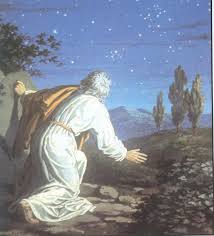
abram1. Genesis 15:6–“And he believed the Lord and He accounted it to him for righteousness.” This passage refers to Abram’s trust in God’s word, when the Lord told him he would have a son. That faith was simply based on God showing Abram the stars of the heavens and declaring “So shall your descendants be.” Of course, Paul’s treatment of this text in Romans 4 and Galatians 3 has greatly influenced my life. As a young man, I frequently depended on my own righteousness, which was nothing but a “self-righteousness.” I’m grateful for the truth that I am “justified by faith apart from deeds of the law” (Rom. 3:28).

Joseph2. Genesis 50:20–“But as for you, you meant evil against me; but God meant it for good, in order to bring it about as it is this day, to save many people alive.” I am greatly encouraged by Joseph’s ability to see the “bigger picture,” and to know that whatever happens in this life is under the control of an all-powerful God whose plans are good. His willingness to forgive rather than hold a grudge is liberating. Since the elected are always rejected in Scripture for the sake of others’ salvation, I know that God’s plan for my life is a good one in spite of the hardships I may face. In fact, God is so gracious that He will use my suffering in order to bring blessing to others. This is the path of the cross that my Savior walked and the path that He bids me to follow (Mark 8:34).

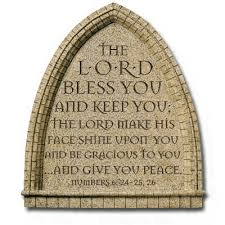
blessing3. Numbers 6:24-26–“The Lord bless you and keep you; the Lord make His face shine upon you, and be gracious to you; the Lord lift up His countenance upon you and give you peace.” This passage, and one other below (1 Sam. 16:7), are also on Enn’s list (sorry Peter, hopefully you won’t mind, after all, it’s nice to have favourite verses in common with others. I’ll bet some of you really like this verse too!). This verse has been a favorite Old Testament passage ever since I used to sing it with my youth group growing up. In the Calvary Chapel church tradition, these are the verses that Pastor Chuck Smith always used to end the morning service with. Lately I have had a desire to meditate more deeply on this passage and to find out exactly what is meant but each expression. It is certainly a deep, rich, and beautiful blessing.

<img class=" wp-image-1267" src="https://www.biblestudywithrandy.com/wp-content/uploads/2014/12/shema.jpg" alt="Deuteronomy 6:4-5, also known as the Shema is quoted everyday by faithful Jews.” width=”171″ height=”128″ /> Deuteronomy 6:4-5, also known as the Shema is quoted everyday by faithful Jews.

4. Deuteronomy 6:4-5–“Hear O Israel: The Lord our God, the Lord is one! You shall love the Lord your God with all your heart, with all your soul, and with all your strength.” How do you not include “the greatest commandment” on a list of favorite Old Testament passages? Actually, this is a verse I have spent about 7 years (off and on) meditating on. I have preached on it a number of times. Perhaps one day I will explore it in more depth on this website. Most importantly, these verses should guide our every thought, word, and action.

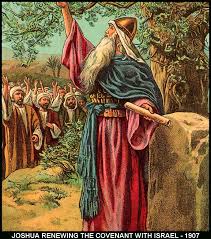
joshua5. Joshua 24:15–“And if it seems evil to you to serve the Lord, choose for yourselves this day whom you will serve, whether the gods which your fathers served that were on the other side of the River, or the gods of the Amorites, in whose land you dwell. But as for me and my house, we will serve the Lord.” I find this to be a very contemporary verse. It is as if Joshua is still challenging us. We live in a pluralistic society. If we are not politically correct, we are not tolerated. There seems to be tolerance for all, except those who commit to the biblical standard of one God. If we quote Jesus and say the way is narrow that leads to life (Matt. 7:14), or insist that no one comes to the Father but by Jesus (John 14:6), we can be assured that our viewpoint will not be welcomed. A world that calls for a tolerance of all beliefs is, ironically, not tolerant of those who express their belief in the one true God. Joshua’s statement takes courage and faith. It also returns us to the truth that the elected will be rejected!

sam6. 1 Samuel 2:30–“Therefore the Lord God of Israel says: ‘I said indeed that your house and the house of your father would walk before Me forever.’ But now the Lord says: ‘Far be it from Me; for those who honor Me I will honor, and those who despise Me shall be lightly esteemed.” When forced to name a favorite Old Testament passage, this is the one that most readily comes to my mind. It may seem like an odd verse to have as a favorite, but my love for this passage stems from my understanding of 1&2 Samuel and the integral part this verse plays in its theology. If it is true as the Westminster Shorter Catechism says that “The chief end of man is to glorify God and enjoy him forever,” then honouring God is our primary objective in life. Paul puts it this way: “Therefore, whether you eat or drink, or whatever you do, do all to the glory of God” (1 Cor. 10:31). This verse, however, is an explanation of how God responds to our actions of honouring or dishonouring Him, and why some are “lifted up” by the Lord, while others are “brought low” (see Hannah’s words, 1 Sam. 2:6; my post on Sovereignty and Free Will in 1&2 Samuel, or my book Family Portraits: Character Studies in 1 and 2 Samuel, which explores this idea in more depth).

heart7. 1 Samuel 16:7–“But the Lord said to Samuel, ‘Do not look at his appearance or at his physical stature, because I have refused him. For the Lord does not see as man sees; for man looks at the outward appearance, but the Lord looks at the heart.” This passage is a constant reminder not to judge by the outer cover–something that I, and every other human being I know, does! The new students I meet each semester are a reminder of this truth. It is interesting how quickly I can form an opinion based on an initial meeting. By the end of the semester, however, my understanding of certain students is totally transformed by the frequent interaction and fellowship that we have shared.

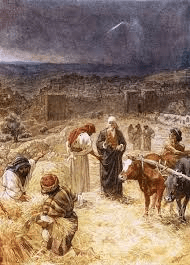
David buys the threshing floor from Araunah where Solomon will later build the Temple

8. 2 Samuel 24:24–“Then the king said to Araunah, ‘No but I will surely buy it from you for a price; nor will I offer burnt offerings to the Lord my God with that which costs me nothing.” I know, this is my third passage from 1&2 Samuel, but if I’m choosing my favorite Old Testament passages and 1&2 Samuel are my favorite books, then what can you expect? I am actually restraining myself, as I could easily add a few more! I often think of this verse during worship when I find myself mouthing the words of a song without singing them from the heart. It is easy to “go through the motions” or to allow tiredness to keep me from giving my all. This is also true of my work, my Bible study, or whatever I do. God is worthy and He deserves my best. If I am going to “honor Him” as 1 Sam. 2:30 reminds me that I should, then I should not be seeking to take the easy way out. In fact, I should find pleasure when my devotion to God costs me something. It certainly cost Jesus something to purchase my salvation.

jeremiah9. Jeremiah 20:9–“Then I said, ‘I will not make mention of Him, nor speak anymore in His name.’ But His word was in my heart like a burning fire shut up in my bones; I was weary of holding it back, and I could not.” When I was in Bible college, and also as a young pastor, Jeremiah was my favorite Old Testament book. I was fascinated by his story and the power of his preaching. Jeremiah reminded me that I had received a holy calling. That calling is not always easy because it inevitably brings conflict. I suppose that this was my introduction to what is becoming the theme of this post, “we are elected to be rejected.” Not that I had it as bad as Jeremiah, but there are always times in ministry when it is tempting to “throw in the towel.” Even though Jeremiah had times when he wanted to give up, yet he was faithful for over 40 years to proclaim God’s word in the most difficult of circumstances.

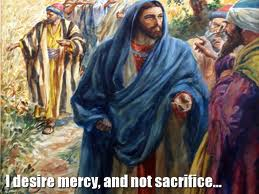
<img class=" wp-image-1273" src="https://www.biblestudywithrandy.com/wp-content/uploads/2014/12/jesus.png" alt="Jesus quotes Hosea 6:6 on 2 occasions in the Book of Matthew (9:13; 12:7)” width=”223″ height=”167″ /> Jesus quotes Hosea 6:6 on 2 occasions in the Book of Matthew (9:13; 12:7)

10. Hosea 6:6–“For I desire mercy and not sacrifice, and the knowledge of God more than burnt offerings.” The word translated “mercy” in this passage is hard to translate with one English word. It carries the meanings of loyalty, faithfulness, and stedfast love. Like 1 Sam. 16:7, this passage reminds me that life with God is never about externals alone. Ritual only has significance in the context of a relationship. If two people are not committed to each other, they can go through the ritual of a wedding ceremony, but only in developing a relationship will they have a true marriage. When I was a young Bible College student, I read a book by J. I. Packer entitled “Knowing God.” That book transformed my relationship with God as I learned what it really meant to “know Him” in a biblical sense. Prophets like Hosea and Jeremiah have a lot to say about knowing God and this was another reason that I was drawn to them and their message.

What Are Your Favorite Old Testament Passages?

Perhaps now that you have patiently waded through my top ten favorite Old Testament passages, you will consider what yours are. If you do, I want to invite you to leave one or two of them in the comment section below with a short note on why this particular Old Testament passage is a favorite of yours. In the future I will do a post on my 10 Favorite New Testament passages and will look forward to hearing yours as well.

Introducing Biblical Interpretation Part 3: Logos Mobile Ed

Introducing Biblical Interpretation Part 3: Logos Mobile Ed

Logos Mobile Ed Course: Introducing Biblical Interpretation. For a look at this resource in Logos, click anywhere on this link.
Logos Mobile Ed Course: Introducing Biblical Interpretation.

“Introducing Biblical Interpretation” is a video-based course on hermenuetics (how to study and interpret the Bible) by Logos Bible Software. In my first post I looked at the layout and overall format of the Logos Mobile Ed courses, as well as giving a brief overview of the purpose and content of this particular course (You can read that review by clicking here). My second post on “Introducing Biblical Interpretation” focused on the content of the first half of this course, noting its strengths and weaknesses (You can read that review by clicking here). This post, my third and final review of this product, will focus on the content of the second half of this course.

In the last half of “Introducing Biblical Interpretation,” Dr. Michael S. Heiser focuses on three important areas: literary context; linguistic context; and application.  The discussion of literary context is by far the longest section of the course, comprising 53 videos. Dr. Heiser divides his teaching on literary context into two broad categories: 1) a discussion on genre, and the various genres that can be found in Scripture; and, 2) a discussion of literary devices or techniques used by biblical authors.

The Importance of Genre in Biblical Intepretation

Because of the length of this section, it is not possible to summarize everything it contains. I will simply note a few of the literary genres and devices that Dr. Heiser talks about and what can be learned from these insights. Heiser argues that it is impossible to know what words mean without an understanding of genre. He illustrates this by the word “descent.” “Descent” has multiple meanings and only by knowing the genre can we discern what is meant by it. For example, the meaning of “descent” differs depending on whether the genre is a genealogy, a landscape plan, or a flight manual. Heiser follows his discussion of knowing the genre by introducing the controversial topic of what it means to interpret the Bible literally. This is an important topic that he returns to later in the course. I will reserve further comment on this idea because I wish to devote a future post to exploring this subject. The discussion of what is literal versus what is figurative, or even, what do we mean by a “literal interpretation” of Scripture, is a key hermeneutical issue and I am glad to see Heiser tackle it.

Knowing the genre is important!

Some of the various genres explored include, Old and New Testament Narrative, genealogies, various types of psalms, genres peculiar to prophetic literature such as the lawsuit or funeral dirge, epistles, and apocalyptic. Heiser spends a lot of time examining prophecy and apocalyptic in both the Old and New Testaments and explaining the differences between the two. This is helpful because these two genres are often confused or, at least, conflated. He differentiates between predictive prophecy and preaching using the usual categories of “forthtelling” (preaching) and “foretelling” (prediction). Heiser emphasizes that about 80% of prophecy is preaching to the contemporary situation the prophet finds himself in. He also discourages placing our own meaning on symbols used by the prophets. It is important that the ancient meaning of the symbols and what it would have meant to the writer, audience, or prophet be the determining factor. Heiser also argues that prophecy can have more than a “one to one fulfillment.” This means that, although a passage might be applied to Jesus, or the new covenant, within the New Testament, it might also have a more immediate fulfillment in the prophet’s own time. He uses Amos 9:10-12 as an example, noting its Old Testament context and its use in Acts 15:12-17 where James (the speaker) and Luke (the author) put a different spin on it. He argues for “Sensus Plenior” which means that although a passage might have a certain meaning within its original Old Testament context, it can take on a “fuller meaning.” This is because God may see something that we in our finiteness may not. Other possible uses of Old Testament passages include analogical (a situation is similar to a past event), or typological (when a person, event, or thing foreshadows something in the future). Although I am in agreement with Heiser, some theological traditions would disagree with some of his conclusions (e.g., some would argue there is only one fulfillment of a prophecy). However, he does an admirable job illustrating his conclusions from Scripture.

Biblical Interpretation: Understanding the Use of Literary Devices

This section of the course includes discussions on such devices as chiasm (mirror imaging), gematria (the use of numbers to communicate a message), hyperbole, metaphor, poetic parallelism, typology, as well as others. For those who are not familiar with these ideas, this section will prove to be very informative. For example, Heiser gives two examples of chiastic structures and explains the significance of this literary device. He shows how the story of the Tower of Babel (Gen. 11:1-9) is laid out in a mirror image, and also how the Book of Matthew can be similarly viewed. The picture below illustrates the chiastic structure of the story of the Tower of Babel. Notice how the ends of the story use similar wording, all working toward the middle of the story where “the Lord comes down” which is the turning point of the story.

Chiastic structures occur frequently in Scripture and recognizing them can aid biblical interpretation.
To purchase this course click on this link.

Most of us who have read Revelation are familiar with the use of gematria in Revelation 13 where the number 666 stands for the anti-Christ. Heiser points out another possible use of gematria in John 1:32 where the Spirit descends as a dove at Jesus’ baptism. In Greek the numerical value of the word “dove” is 801 which is the total numerical value of the Greek alphabet. It is suggested that the use of “dove” here may be a way of referring to Jesus as “the Alpha and Omega” (the first and last letters of the Greek alphabet). Another, more controversial proposal by Heiser, is that gematria may explain some of the large numbers used in the Old Testament regarding populations and armies. While some maintain the numbers should be taken literally, others argue that geography, ancient sociology, and archaeology do not support some of the large numbers (e.g., 2-3 million Israelites leaving Egypt and wandering in the wilderness) used in the Old Testament. The argument does not dispute inspiration, but suggests that the numbers must have another significance other than just literal, and Heiser suggests that gematria may perhaps be one possible explanation.

The Linguistic Context and Biblical Interpretation

Understanding language, including syntax and grammar is essential to biblical interpretation.

Unit 5 of “Introducing Biblical Interpretation” concerns understanding words and syntax. Heiser mentions this is where some often begin their Bible study. Using concordances or Lexicons to do word studies is important, but he maintains that a word, in and of itself, has no meaning. He argues, and rightly so in my opinion, that without knowledge of the social context (Unit 3 in this course) and the literary context (Unit 4, just discussed), it is impossible to know what a word means. Heiser states,  “If you can’t understand what a person thinks, how can you understand what they wrote?” He illustrates this by using the word “run.” By itself the word “run” has no meaning. “Context is King” as Heiser says. Is “run” a noun or verb? Actually it is both, but only context will tell you which. Furthermore, the word “run” when used as a noun has 12 different meanings, while “run” used as a verb has 50 meanings! Although this unit addresses a very important subject for Bible study, its primary value is for the Logos owner and user. I found this unit extremely helpful in teaching me things about doing word studies, or syntax studies in Logos that I never knew before. I will certainly return to the videos in this section again and again. However, if a teacher wanted to use the videos in this unit to teach a class about linguistics and they were not Logos users, then most of the instruction here would not be very helpful (but see my comments in the next paragraph below). Among the topics covered (again there are too many to mention them all) are: detecting the form of a word (in the original language); determining relationships between words; detecting the semantic range; and understanding and analyzing at the word level.

papyrus
Heiser ends unit 5 with a helpful discussion on the differences between manuscripts of the Bible.

There are, however, some videos in this section that anyone would find helpful, including those without Logos. One brief segnment contains a further discussion on the use of scholarly commentaries. Here Heiser returns to a subject explored earlier in the course (the use and value of commentaries) and demonstrates how scholarly commentaries are helpful in providing word and syntax insights.  Heiser also ends this section with a very helpful discussion about differences in ancient manuscripts. For the person who struggles with why there are so many English versions, or which one is the best, or asks, why they differ, or why some English translations have footnotes that give an alternate reading or leave out a passage entirely, these 4 videos provide a helpful foundation for answering such questions.

Application!

The final unit (#6) concerns application on both a personal level, and suggestions for those who are preparing sermons or Bible studies in order to instruct others. Regarding the individual and application, Heiser suggests we should always ask what a passage teaches us about God, his character, and how he carries out his plans and goals,  what we learn about other people (does it illuminate something in our own lives?), and how the passage helps us apply the two greatest commandments of loving God and others. Heiser continues with some practical advice for preachers. Some of his suggestions include: being real with people (open not guarded), speaking to several groups of people (families, singles, old, young, etc.), and making application that is rooted in daily life (real events as opposed to mystical or unlikely situations)

Strengths and Weaknesses of the Second Half of “Introducing Biblical Interpretation”

weakling_thumb[3]I found two minor errors in the second half of this course. The first occurs when Heiser is discussing the New Testament’s use of the Old. As noted above, he argues for “Sensus Plenior” (a passage may be shown to have a “fuller” meaning in the NT). When discussing Acts 13:34-35 he notes that this is a quote from Psalm 16:10. Throughout the rest of the discussion, however, he constantly refers to this reference as Psalm 22. The screen has the correct reference and the written copy also has the correct reference, so hopefully the listener will realize that Heiser keeps accidentally mentioning the wrong Psalm. A second error occurs when Heiser is talking about ancient biblical manuscripts. As he is informing his listeners about the oldest complete copies of the Septuagint (Greek Old Testament), he notes that they are from the 4th century. This is correct, but he then states that they date to around 550 A.D. which is incorrect. In fact, the 4th century refers to the 300s not the 500s, and the correct date is around 350 A.D. for these manuscripts. This mistake of 200 years is also found in the written copy. These are minor issues, but they are inaccuracies worth noting in case Logos is able to correct these mistakes in the future.

There are many strengths to the second half of the course. Perhaps the greatest is the indepth treatment of various biblical genres and literary devices. In my opinion, there is a wealth of information here that acts as a great introduction for someone beginning more serious Bible study. I am also happy to report that a majority of the Logos resources recommended under “Further reading,” were also available to me. In my review of the first half of this course (review #2 in this series), I noted that I did not have access to a lot of the recommended reading material. The reverse was true for the second half of the course, so this was a welcome change. Again, the availability of the recommended reading material will depend on what version of Logos you have. Overall this is a very fine course on biblical interpretation. Heiser knows his subject well and presents it in a clear but relaxed style. I know that I will come back again and again to some of the videos in this series and I heartily recommend it to others.

To or the Logos Mobile Ed course, “Introducing Biblical Interpretation: Contexts and Resources,” click on this link.

For reviews on similar Logos Mobile Ed courses, see my colleague Lindsay Kennedy’s reviews at: mydigitalseminary.com

(Thanks to Logos who provided a copy of this course in exchange for an unbiased review)

Sovereignty and Free Will in 1&2 Samuel

Sovereignty and Free Will

Calvin and Arminius disagreed over the Bible's teaching of Sovereignty and Free Will
Calvin and Arminius disagreed over the Bible’s teaching of Sovereignty and Free Will

The debate between sovereignty and freewill will probably continue until the Lord returns. This is part of the classic controversy between what is known as Calvinism and Arminianism (for a comparison of these two belief systems click here). Simply put, the issue is, does God’s sovereignty overrule people’s ultimate freedom to choose, or can there be freedom of choice while maintaining that God is sovereign? The traditional Calvinistic position maintains that complete freedom to choose negates God’s sovereignty. Therefore within reformed theological circles (i.e., those who espouse a Calvinistic theology) it is affirmed that people have choice, but that choice is ultimately controlled by God’s sovereignty (For a fuller explanation click here for Wikipedia on Calvinism or click on the link above). The classic Arminian position advocates that it is possible for human beings to have complete freedom of choice without impinging on God’s sovereignty (for a defense of this position click here to read Jack Cottrell’s article entitled, “Sovereignty and Free Will”).

Piper's "FIve Points" is a contemporary look at the 5 points of Calvinism including sovereignty and free will.
Piper’s “FIve Points” is a contemporary look at the 5 points of Calvinism including sovereignty and free will.

Sovereignty and free will has been a hotly contested issue for many centuries and continues to be passionately debated within the church today (the popularity of books by John Piper, among others, has created renewed interest in this topic). It has been my experience that the topic of sovereignty and free will is often discussed in an atmosphere where each side pulls out their favorite scriptures supporting their viewpoint. It becomes a “prooftext” debate. I think a more productive approach is to look at this topic through the lens of a biblical book. Understanding the overall message(s) of a biblical book helps to fit the topic of sovereignty and free will within its biblical context. This post is not an attempt to solve the debate “once and for all,” but to look at how these ideas are addressed within the canonical context of 1&2 Samuel.

Sovereignty and Free Will in 1&2 Samuel

Hannah's prayer/song celebrates God's sovereignty
Hannah’s prayer/song celebrates God’s sovereignty

The Books of Samuel begin with a very strong statement regarding God’s sovereignty. Hannah’s prayer/song in 1 Samuel 2:1-10 repeatedly emphasizes God’s power over His Creation and creatures. In the heart of this passage Hannah utters the following words: “The Lord kills and makes alive’ He brings down to the grave and brings up. The Lord makes poor and makes rich; He brings low and lifts up (1 Sam. 2:6-7). Chapter 2 continues by contrasting the wickedness of Eli’s sons (Hophni & Phinehas) with the godly growth of Samuel. After Hopni & Phinehas reject their father’s rebuke, we are told, “Nevertheless they did not heed the voice of their father, because the Lord desired to kill them” (1 Sam. 2:25). This statement reaffirms the words of Hannah’s prayer, “The Lord kills and makes alive.” Such strong statements at the beginning of 1 Samuel may lead the reader to conclude that the sovereignty of God determines a person’s destiny without any regard to their free will. However, this understanding is immediately balanced in the text by the words of an unknown prophet who comes to Eli and rebukes him and his sons for their disobedience (1 Sam. 2:27-36). In the midst of this prophetic utterance, the man of God enunciates a principle which holds sway over all of the characters mentioned in 1&2 Samuel. Speaking as the Lord’s mouthpiece he proclaims, “‘I said indeed that your house and the house of your father would walk before Me forever,’ But now the Lord says, ‘Far be it from Me; for those who honor Me I will honor, and those who despise Me shall be lightly esteemed‘” (1 Sam. 2:30–my emphasis). This significant statement demonstrates that the Lord’s decisions to “kill and make alive,” or “bring low and lift up,” are not arbitrary decisions, but are based on people’s response to Him. This pattern of lifting up or bringing low is evidenced throughout 1&2 Samuel (e.g., Eli and Samuel, Saul and David, David and Absalom), and is consistently based on the actions of people who either honor or despise the Lord. What follows is an excerpt from my book “Family Portraits: Character Studies in 1 and 2 Samuel.” Sovereignty and free will are significant issues in the discussion of Absalom’s revolt. This excerpt (with a small amount of editing) is taken from the introduction to chapter 24 entitled, “Absalom: The Rebel.”

Absalom’s Rebellion in the Context of 1 and 2 Samuel (2 Sam. 13-20)

Purchase at Amazon USA / UK, or get the ebook from westbow press.com
Purchase at Amazon USA / UK in hardback, paperback, or kindle, or from westbow press.com

In 2 Samuel chapters 13–20 the “strong” house of David (2 Sam. 3:1–5) unravels in fulfillment of the prophetic word announced in 2 Samuel 12:10–11. There the prophet Nathan, who formerly had announced to David an enduring house (2 Sam. 7:11–16), proclaims that the sword will never depart from his house, and that God will also raise up “evil” from his own house.
Within this framework, the sinful actions of Absalom and others recounted in these chapters become viewed as the repercussions of David’s own sin with Bathsheba and Uriah (2 Sam. 11). Viewed from this perspective, the events are a divine judgment. David recognizes this in his flight from Absalom, when he rebukes Abishai over Shimei’s cursing and says, “Let him alone, and let him curse; for so the LORD has ordered him” (2 Sam. 16:11b). One writer has even entitled these chapters: “David Under the Curse” (Carlson, David the Chosen King)

Although David suffers greatly in these chapters, he is ultimately vindicated. While one might be hard-pressed to describe this as a “happy ending,” nonetheless it is a positive ending for David. Paradoxically then, David’s road becomes one of blessing and curse in these chapters. How is this to be explained? Furthermore, does David’s sin provide an excuse for Absalom? Can Absalom say in defense, “It’s not my fault; daddy made me do it”? Can he blame his rebellion on divine determinism which had decreed problems in David’s house? The story will clearly show that Absalom is responsible for his own decisions and bears the weight of his own guilt, but how does the text perceive this interlocking of divine sovereignty and free will?

David flees Absalom while Shimei curses and throws stones at him.

I suggest the answer to all of the questions above is found in the introductory chapters of 1 Samuel (here I explore in more depth comments I have made when introducing this post). In a key statement made to Eli in 1 Samuel 2:30 God declares, “Those who honor Me I will honor, and those who despise Me shall be lightly esteemed” (cursed). In Nathan’s rebuke of David he asks, “Why have you despised the commandment of the LORD, to do evil in His sight?” (2 Sam. 12:9). We have already noted that David accepts Shimei’s “cursing” because he believes it comes from the Lord (2 Sam. 16:11). The word used for “curse” in this passage is the same word translated “lightly esteem” in 1 Samuel 2:30. Thus, following the logic of 1 Samuel 2:30, the reason for David’s divine punishment (curse) in these chapters is because he has despised the Lord. Likewise, the sin of Absalom dishonors both David (the Lord’s anointed) and the Lord Himself, as we shall see (this is examined later in the chapter). As a result, Absalom experiences divine punishment too (2 Sam. 17:14b).

Judgment, however, is only part of the story. As we have noted, David also receives blessing from the Lord. This is explained by David’s humble submission to the Lord throughout the ordeal of Absalom’s revolt (e.g., 2 Sam. 15:30–31; 16:11). In fact, 2 Samuel chapters 15–18 alternate between David and Absalom, contrasting their actions and words just as 1 Samuel 2:11–36 shifts the focus between Samuel and Eli and his sons, comparing them. This contrast highlights David’s humility which results in his vindication, and Absalom’s ungodliness which results in his defeat.

Although the biblical text says that Absalom caught his head in the tree, it is probably a reference to Absalom's hair.
Absalom’s defeat is decreed by the Lord (2 Sam. 17:14)

In conjunction with 1 Samuel 2:30, Hannah’s prayer (1 Sam. 2:1–10) also provides the proper background for understanding Absalom’s revolt and its outcome. 2 Samuel 17:14b: “For the LORD had purposed to defeat the good advice of Ahithophel, to the intent that the LORD might bring disaster on Absalom,” is a direct reflection of Hannah’s words, “The LORD kills and makes alive; he brings down to the grave and brings up” (1 Sam. 2:6). Absalom’s self-exaltation resulted in the Lord bringing him down. Similarly, David’s low point was the result of his sin, but his final vindication was based on his humble response to the Lord’s discipline which, in turn, resulted in the Lord lifting him up (1 Sam. 2:7). Putting these two passages together from 1 Samuel 2 (vv. 1–10 and v. 30) helps us to understand the themes of divine sovereignty and free will and how these two seemingly contradictory principles work together. It also explains how David walks the road of cursing and blessing in these chapters. God is sovereign. It is he who “brings low and lifts up” but God’s actions are not arbitrary. They are based on the decisions of people who either choose to honor or despise him. (End of excerpt).

Hopefully this brief treatment of the David and Absalom story in 2 Samuel 13-20 provides an example of how sovereignty and free will work together to accomplish God’s purposes. For a further treatment of this subject see the rest of the chapter on Absalom in “Family Portraits: Character Studies in 1 and 2 Samuel.”