Are New Testament Manuscripts Reliable?

Are New Testament Manuscripts Reliable?

This New Testament manuscript known as P52 is a fragment of John's gospel dating between 120-150 A.D.
This New Testament manuscript known as P52 is a fragment of John’s gospel dating between 120-150 A.D.

A question frequently asked of Christians is, “How do you know you can trust the Bible?” After all, isn’t it true that the copies of the New Testament that exist are hundreds of years later than the original New Testament manuscripts? Noted New Testament scholar, Dr. Craig A. Evans, seeks to answer these, and similar, questions in the Logos Mobile Ed course, The Reliability of New Testament Manuscripts. You can tell from the title that Dr. Evans certainly believes the New Testament manuscripts are reliable and he produces a lot of good evidence to prove his case in this one hour video course. Even though I had a similar course in seminary many years ago, Dr. Evans reveals some new evidence that strengthens the case for the reliability of New Testament manuscripts. I’ll share some of this interesting information in this post, so keep reading!

Outline and Contents of The Reliability of New Testament Manuscripts

The course is broken down into the following 11 sections:
1. The Basics of New Testament Manuscripts
2. Finding Manuscripts in Logos
3. Examples Demonstrating the Quality of New Testament Manuscripts
4. Adding Manuscript Images to Presentations or Documents
5. Exploring Ancient Manuscripts and Resources
6. The Comparative Strength of the New Testament Manuscript Record
7. The Longevity of the Autographs
8. Researching the Works of Tertullian
9. The Number of Autographs
10. Accessing and Navigating the Textual Apparatus
11. The Preservation of the New Testament in Translations

Each section is of varying lengths (anywhere from 3-10 minutes each) and includes, not only Dr. Evans’ lectures, but also instruction on how to utilize Logos in the study of New Testament manuscripts. One advantage of Logos is that users will find that the manuscripts Dr. Evans speaks about are readily available in the Logos library, along with some photographic examples. The sections above which  provide instruction on how to use features in Logos include 2, 4, 5, 8, and 10.

Dr. Evans compares the evidence of other classical documents and demonstrates the preservation of New Testament manuscripts is far superior.

One lecture compares the body of manuscripts available from classical sources, such as Caesar’s Gallic War or ancient histories by Livy or Tacitus with the body of manuscripts availlable for the New Testament. In the case of classic manuscripts, there are usually only a handful of a particular writing available, and these copies date hundreds of years, and at times over a thousand or more years, later than the originals. And yet the authenticity of these documents is never questioned (see photo above). By comparison, Dr. Evans notes that there are 5,800 manuscripts of the New Testament. These are not all complete copies, and many date from the Middle Ages. However, a few hundred “date back to ancient antiquity,” and about four dozen date to the year 300 A.D. or earlier (most of these are incomplete, and some are small fragments). This body of literature makes the New Testament the most well-preserved document of antiquity. For an excellent article on this topic which lists ancient classical documents, how many copies we have, and the length of time between the copies and original see Manuscript evidence for superior New Testament reliability.

How Long Could an Original Manuscript Last?

One of the most interesting lectures to me was section 7, “The Longevity of the Autographs.” Dr. Evans notes that when he was in seminary he once asked his professor, “How long did the autographs (original copies) last?” His professor answered that it was probably about 10-20 years. Therefore, it used to be thought that there was a great distance (2 centuries or more) between the original writing of, say a gospel or letter, and the earliest copies that we possess. If copies only lasted for 10-20 years, this would mean in the space of 200 years as many as 10-20 copies would have been made, allowing greater opportunity for scribal errors to be introduced into the text.

The life of a manuscript was not 10-20 years as previously thought, but could last 150-500 years.

The facts are actually quite different. Dr Evans notes a study in 2009 by George Houston (you can access that study here) where the remains of 53 ancient libraries were examined. These libraries ranged from a collection of 12 books to nearly 1,000. This study demonstrated that original documents were extremely well-preserved and lasted anywhere from 150-500 years! Manuscripts were written on papyrus, or animal skin (known as vellum), with durable ink. Books (or scrolls) were considered very valuable, and were thus well taken care of. The library of Qumran (known as the Dead Sea Scrolls) is an excellent example of how manuscripts were preserved. A number of the manuscripts from Qumran are anywhere from 100-300 years old. What this means for New Testament manuscripts is that the originals could easily have lasted for several centuries, overlapping some of the copies we have today.

Dr. Evans uses this chart to illustrate that the original copy of Matthew's gospel could easily have existed into the third century. See my discussion below for further information.
Dr. Evans uses this chart to illustrate that the original copy of Matthew’s gospel could easily have existed into the third century. See my discussion below for further information.

Dr. Evans uses the Gospel of Matthew as an example (see the above photo). Matthew is thought to have composed his gospel around 75 A.D. One early collection of the gospels which we possess, known as P45 (which contains about half of the 4 gospels), was composed somewhere around 210-220 A.D. If Matthew’s original lasted for 225 years (a conservative guess by Dr. Evans), this means that Matthew’s original (as well as Mark, Luke, and John) could still have been available for comparison when P45 was composed. Dr. Evans states it this way, “So the idea that there was this was wide gap, this broken link between the originals, written in the first century, and our oldest extant copies that we now possess, that you and I can go see in museums and libraries around the world—instead of a wide, 150-year gap, where who knows what changes may have taken place, we may well have had the originals lasting right on into the third century itself.” (Evans, C. A. [2014]. NT308 The Reliability of New Testament Manuscripts. Bellingham, WA: Lexham Press.)

Was There Only One Original of Each New Testament Manuscript?

Another interesting fact noted by Dr. Evans is that when an original manuscript was produced in ancient times, a copy was always made of it and checked against the original. In some cases 3 or 4 copies were produced. This means when we are speaking of the originals autographs of the New Testament, there wouldn’t simply be 27 (the number of New Testament books), but at least 54, and perhaps more! These extra copies of the original lend an even greater likelihood that the autographs survived for centuries.

Along these lines, Dr. Evans notes that there are at least two ancient references to New Testament autographs surviving for centuries. The Church Father, Tertullian, writing around 190 A.D. in a document entitled, Prescription Against the Heretics, “complains of the heretics who mutilate the text, and he says, ‘If you don’t believe me, then check out the autographs of Paul’s Letters,’ and he mentions a few letters by name, ‘which you can find in Hierapolis, in Asia Minor.’” In a writing of the early fourth century by Bishop Peter, the bishop mentions that the original of the Gospel of John can still be viewed in Ephesus. Above, I posted a photograph of a famous fragment of the Gospel of John which can be seen today in the John Rylands Library at the University of Manchester, England. This fragment dates to about 140 A.D., not long after John’s Gospel was penned. If Bishop Peter’s statement is accurate, the original of John’s Gospel existed at least into the early 300s A.D. This means the Gospel of John fragment (known as P52) in the library at the University of Manchester was written well within the time that the original still circulated. There is absolutely nothing like this in classical literature. As noted above, hundreds, even thousands, of years separate the originals from their copies in classical literature,  not so the New Testament.

In conclusion, this is a great course and provides some wonderful evidence for the reliability of New Testament manuscripts. Dr. Evans presentation is clear and compelling.

The Reliability of New Testament Manuscripts is available at Logos/Faithlife

Reliability of New Testament Manuscripts

Caesarea Philippi and the Nephilim?

Caesarea Philippi and the Nephilim?

The Nephilim are first mentioned in Genesis 6:4.

My title for this article is actually greatly abbreviated. If I were to have written out the entire title it would have been something like, “What do Peter’s confession of Jesus as the Christ at Caesarea Phillippi, the Nephilim, the worship of Baal, and the locations of Mount Hermon and the land of Bashan all have in common? The question sounds crazy and some Bible readers may not even be familiar with places like Mount Hermon or Bashan, and probably know very little about the mysterious Nephilim. So a very natural question is, “Who knows and who cares?” If you’ll bear with me and read through this entire post, I will try to demonstrate the connection between each of these subjects and what we can learn from their connection. Personally, the connection between these subjects has opened my eyes up to things that I had never noticed in Scripture before. As a side-light, it has also increased my conviction that learning biblical geography can help one better understand and appreciate certain stories in the Bible. I will tackle each of these subjects one at a time. As I move from item to item the picture I’m seeking to convey should become more clear. Much of the insight for this post must be credited to Dr. Michael Heiser and his recent book, THE UNSEEN REALM.

Caesarea Philippi

This artistic recreation of the pagan sanctuaries at Caesarea Philippi is on display at the archaeological site.
This artistic recreation of the pagan sanctuaries at Caesarea Philippi is on display at the archaeological site. The buildings from left to right are: 
1. The Temple of Augustus Called the Augusteum (On the Left); 
2. The Grotto or Cave of the God Pan (Behind the Temple of Augustus)
; 3. The Court of Pan and the Nymphs (To the Right of the Temple of Augustus); 
4. The Temple of Zeus (In the Middle)
; 5. The Court of Nemesis (To the Right of the Temple of Zeus); 
6. The Tomb Temple of the Sacred Goats (Upper Right); 
7. The Temple of Pan and the Dancing Goats (Bottom Right)

Caesarea Philippi is famous biblically for being the place where Jesus asked his disciples, “Who do men say that I, the Son of Man, am?” (Matt. 16:13; cf. Mark 8:27). After the disciples mentioned many well-known biblical people, Jesus asked them, “But who do you say that I am?” To which Peter responded, “You are the Christ, the Son of the living God” (Matt. 16:16). Caesarea Philippi is an interesting place for this confession since, as is usually pointed out by any good commentary, it was a seat of pagan worship in a predominantly Gentile area.

The city known as Caesarea Philippi in Jesus’ time, was originally established by Alexander the Great as a countryside shrine to the Greek god Pan located in a cave that possessed an underground stream so deep, it was considered bottomless. The place was named Paneas and later during the reign of Herod the Great, Herod built a city there. In honor of the emperor, he also built a temple to Augustus. After Herod’s death, his son Philip expanded the size of the city and renamed it Caesarea Philippi in order to honor both Caesar and himself, as well as to distinguish it from the Caesarea built by Herod on the coast. Today the city retains its ancient name, being pronounced Banias (the locals pronounce “p” like “b”). Anyone who checks a good Bible commentary can discover this information, and although it is significant that Peter confesses Jesus as the Christ in this pagan city, it is only the tip of the iceberg when it comes to understanding the history of this area.

Mount Hermon, Baal, and the Nephilim

Caesarea Philippi/Banias sits at the foot of Mount Hermon in this photo, a mountain believed to be the dwelling abode of Baal in ancient times.

As the photo above illustrates, Caesarea Philippi/Banias is located at the foot of Mount Hermon (see center and bottom of photo). Mount Hermon is part of a range that divided the land of Israel from ancient Syria and Phoenicia (modern Lebanon). The Phoenicians, worshippers of Baal (think Jezebel–e.g., 1 Kgs. 18:19), actually considered Mount Hermon to be the mountain of Baal. Long before Alexander the Great instituted the worship of Pan in the area, Baal was the main attraction. In fact, Mount Hermon was also known as Mount Baal-Hermon in biblical times (Judg. 3:3; 1 Chron. 5:23).

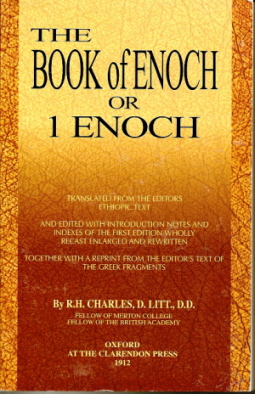
As if the worship of Baal doesn’t provide Mount Hermon with enough of a tarnished reputation, there is still a more nefarious incident associated with it. According to the Book of Enoch, and Jewish tradition, Mount Hermon was the gathering place of the rebellious angels who descended from its heights to mate with the daughters of men, resulting in the birth of the Nephilim. I have included a copy of chapter 6:1-6 of the Book of Enoch which relates the incident:

<img class=”size-full wp-image-2399″ src=”https://www.biblestudywithrandy.com/wp-content/uploads/2016/03/1Enoch.jpg” alt=”The Book of Enoch taught that the rebellious angels of Genesis 6 descended from Mount Hermon to mate with the daughters of men and give birth to the Nephilim.” width=”255″ height=”394″ /> The Book of Enoch taught that the rebellious angels of Genesis 6 descended from Mount Hermon to mate with the daughters of men and give birth to the Nephilim.

Book of Enoch
6:1 And it came to pass when the children of men had multiplied that in those days were born unto them beautiful and comely daughters. 2 And the angels, the children of the heaven, saw and lusted after them, and said to one another: ‘Come, let us choose us wives from among the children of men and beget us children.’ 3 And Semjâzâ, who was their leader, said unto them: ‘I fear ye will not indeed agree to do this deed, and I alone shall have to pay the penalty of a great sin.’ 4 And they all answered him and said: ‘Let us all swear an oath, and all bind ourselves by mutual imprecations not to abandon this plan but to do this thing.’ 5 Then sware they all together and bound themselves by mutual imprecations upon it. 6 And they were in all two hundred; who descended ‹in the days› of Jared on the summit of Mount Hermon, and they called it Mount Hermon, because they had sworn and bound themselves by mutual imprecations upon it (Charles, R. H. (Ed.). (1913). Pseudepigrapha of the Old Testament (Vol. 2, p. 191). Oxford: Clarendon Press.).

To assert that the Book of Enoch teaches that the Nephilim are a result of the rebellious angels who descended from Mount Hermon, is not to suggest that this is necessarily a historical fact. It is only to assert that it was taught in Jewish tradition to be the place of this event. This tradition further enhances the evil reputation surrounding this area. Jews of the 1st century would certainly have been aware of this tradition, as the Book of Enoch was well-known to them. In fact, Peter, the very one who confesses Jesus to be the Christ at Caesarea Philippi, alludes to the Book of Enoch in 2 Peter 2:4-5.

Before leaving a discussion of Mount Hermon, it’s important to point out that its name also has significance. As Heiser states, “Just the name ‘Hermon’ would have caught the attention of Israelite and Jewish readers” (The Unseen Realm, p. 201). The name Hermon is derived from the Hebrew words ḥerem (a thing devoted to God for destruction) or ḥaram (the verb form which means to devote to destruction because it is set apart to God alone). These are the words used in the Conquest narrative (Deut.-Joshua) to describe the utter destruction of the people of Canaan. Heiser believes that this word is particularly connected with the descendants of the Nephilim (e.g., Num. 13:33). Whether Heiser’s theory–that the utter destruction was aimed at the descendants of the Nephilim–is correct must wait for a future post. My point here is that the use of this word once again seems to associate Mount Hermon with the Nephilim.

Bashan–the Place of the Serpent

This map show the area of Bashan colored in green on the right.
This map shows the area of Bashan colored in green on the right.

Moving out in an ever-widening circle, Bashan is the territory in which Caesarea Philippi and Mount Hermon reside. Although one meaning of Bashan is “fertile, stoneless piece of ground,” another meaning of this root is “Serpent” (Lete, del O. G. (1999). Bashan. In K. van der Toorn, B. Becking, & P. W. van der Horst [Eds.], Dictionary of deities and demons in the Bible [2nd extensively rev. ed., p. 161]). Bashan has associations with the Rephaim, descendants of the Nephilim going way back in antiquity. Bible students should recall that Israel, under the leadership of Moses conquered this territory which belonged to Og king of Bashan. In fact, Joshua 12:4-5 says it this way:

“The other king was Og king of Bashan and his territory, who was of the remnant of the giants [Hebrew = Rephaim], who dwelt at Ashtaroth and at Edrei, and reigned over Mount Hermon, over Salcah, over all Bashan, as far as the border of the Geshurites and the Maachathites, and over half of Gilead to the border of Sihon king of Heshbon.”

Tablet like these discovered at the ancient Canaanite city of Ugarit further confirm that Bashan was known as "the place of the serpent," and the territory of the Rephaim.
Tablets like these discovered at the ancient Canaanite city of Ugarit further confirm that Bashan was known as “the place of the serpent,” and the territory of the Rephaim.

Note the references to Mount Hermon and the Nephilim in this passage. Not only does the Bible state that King Og of Bashan is a descendant of the Nephilim, according to Heiser the designation of Og as an “Amorite” associates him with Babylon. Furthermore, the dimensions of his bed (see Deut. 3:8-11) “are precisely those of the cultic bed in the ziggurat called Entemenanki–which is the ziggurat most archaeologists identify as the Tower of Babel referred to in the Bible” (Heiser, The Unseen Realm, p. 198). All the connections start to become a little mind-blowing, not to mention confusing for some. I’ll leave it to those interested in pursuing this further to read Dr. Heiser’s book. The point here is that Bashan, the territory in which Caesarea Philippi resides, has ancient associations with the Nephilim, as well as carrying the meaning of  “the place of the Serpent” The association of Bashan with “The place of the serpent,” as well as being a dwelling place of the Rephaim ( a word used in the Bible for the descendants of the Nephilim) also finds confirmation in the Canaanite literature discovered at Ugarit (see photo on left).

The Gates of Hades (Hell)

This cave in Caesarea Philippi, known as the Cave of Pan was also called, "The Gates of Hades." The cave is still visible today to anyone visiting Banias.
This cave in Caesarea Philippi, known as the Cave of Pan was also called, “The Gates of Hades.” The cave is still visible today to anyone visiting Banias.

Finally, in returning to Caesarea Philippi, given the associations of this area with Greek gods, Baal, the Nephilim, and the name “place of the serpent,” it should come as no surprise that it was also associated with the realm of the dead. The Canaanites taught that the Rephaim were the dead spirits of ancient kings, thus associating Bashan with the underworld. Interestingly enough, the Cave of Pan in Caesarea Philippi was called, “The Gates of Hades.” This may be related to the idea that the cave was believed to be a bottomless pit (see comments above). Against this background, Jesus’ statement following Peter’s confession that “the gates of Hades [hell] will not prevail against it (i.e., the church),” is very illuminating!

In conclusion, the fact that Peter’s confession occurs in a pagan area is remarkable enough. But when one learns the history of the area and the traditions associated with it, Peter’s confession of Jesus as the Christ the Son of God takes on greater significance. This confession is declared in “the place of the serpent.” It is declared in an area associated with divine (the Nephilim), as well as human (worship of Baal) rebellion. In the darkest place possible, Jesus asked his disciples who they thought he was, and the light of God shone on Bashan through Peter’s confession.

The First Century Synagogue at Magdala

The First Century Synagogue at Magdala

magdala
An aerial view of the area of Migdal, the location of ancient Magdala. Magdala can be located to the left of center in this picture. The city of Tiberius, is located approximately 3.7 miles (6 kilometers) south of Magdala and can be seen in the top of the picture.

Whenever, I have the opportunity to visit Israel, the inevitable question that is asked is, “What was your favorite place to visit?” There are always perennial favorites like, Tel Dan, the City of David, or the Garden Tomb, but I’m always excited to see something I haven’t seen on previous trips. On my most recent trip (March 4-12, 2016), I would have to say the first century synagogue at Magdala qualifies as my favorite place.

The synagogue at Magdala was only recently discovered in 2009. The discovery occurred as a result of the Magdala Project. This project was the vision of the Legionaries of Christ, a group whom Pope John Paul II had asked to take charge of the Pontifical Notre Dame of Jerusalem Center in 2004. The vision was to create a similar center in Galilee for prayer and hospitality for visitors. As with every building project in Israel, it is important to first do some preliminary archaeological investigations, so that ancient remains are not destroyed. It can be said without exaggeration that the Magdala Project hit the motherload when, not only a portion of the ancient first century town of Magdala was uncovered, but especially when a synagogue at Magdala, dating from the first century was discovered! Listen to the words of Dina Gorni, one of the directors of the archaeological excavation: “It is a kind of a miracle, I think. We didn’t know there was any ancient material on this site. We knew of material further south, where there had been extensive excavations. We were only digging here as a precautionary measure before a building project began.” (Read more at http://www.wnd.com/2013/01/stunning-find-from-time-of-jesus/#r7rL5xUJroSoJzjE.99)

The Significance of the Synagogue at Magdala

Why is the synagogue at Magdala such an exciting find? There are several reasons. First, Gorni notes that it is only one of seven synagogues in all of Israel that is dated to the 1st century A.D. Second, and more significantly, it is the oldest synagogue that has ever been found. Dates range from 50 B.C. – 68 A.D. for the life of the synagogue. Some would even date its beginnings to 1 A.D. It seems certain that the synagogue was destroyed by the Romans in 67-68 A.D. during the First Jewish Revolt. This means the synagogue dates to the time when the Second Temple (Herod’s Temple) was still standing. Third, for Christians, this means the synagogue at Magdala was in use during the life and ministry of Jesus.

The synagogue at Magdala: frontal view

Although there is no mention of Jesus teaching in the synagogue at Magdala, it seems likely for several reasons: 1) The gospels testify to Jesus preaching in the synagogues throughout Galilee (Matt. 4:23; Mark 1:39); 2) Jesus’ association with Mary Magdalene (Mary of Magdala) makes it possible that he met her in Magdala (although she could have met him elsewhere); 3) The journey from Nazareth to Capernaum (a major center of Jesus Galilean ministry) would have involved passing by (or going through) Magdala (Capernaum is 5 miles further north along the Sea of Galilee). The Lexham Bible Dictionary states: “Jesus’ two journeys between Nazareth and Capernaum also would have taken Him through Magdala, which is situated between the two locations (Matt 4:15, Luke 4:16, 31). The journey from Cana to Capernaum depicted in the Gospel of John (John 2:1, 12) could also have taken Jesus through Magdala” (Ryan, J. [2012, 2013, 2014, 2015]. Magdala. In J. D. Barry, D. Bomar, D. R. Brown, R. Klippenstein, D. Mangum, C. Sinclair Wolcott, … W. Widder (Eds.), The Lexham Bible Dictionary. Bellingham, WA: Lexham Press). This means that when standing in the synagogue at Magdala, looking around at the mosaic floor (see photo immediately below), the rows of stone benches, and the frescoes still visible on the walls (see the last photo in this article), we are probably seeing the very site where Jesus would have taught, and where Mary Magdalene would have worshipped. As those associated with the  Magdala Project point out, some of the worshippers at this synagogue would certainly have been witnesses to the life and ministry of Jesus, including perhaps the feeding of the 5,000, as well as other miracles he performed in Galilee. Who knows, perhaps Jesus cast seven demons out of Mary Magadalene (Luke 8:2) in Magdala. Maybe even in the synagogue itself (cf. Mark 1:21-27).

This photo shows some of the mosaic floor. A pillar of the synagogue and the Magdala Stone can be scene on the left-center.

Two Significant Finds from the Synagogue at Magdala

The Magdala Stone. The menorah, the jars, and the pillars to the Temple are clearly visible in this view.

Besides the synagogue itself, there are two other important finds. One is a coin that dates to 29 A.D. This coin was found in the synagogue and firmly dates it to the time of Jesus’ ministry. The second important discovery has become known as the “Magdala Stone” (see photo above). In the main hall of the synagogue, a square stone was found with reliefs carved on the top and all four sides (only the bottom is blank). One of the reliefs depicts a menorah surrounded by amphorae (jugs) and pillars that represent the Temple in Jerusalem. The significance of the menorah (the 7-branched candlestand that stood in the Holy Place) is that it is the oldest known carving of a menorah. Since it dates to the time when the Temple was still standing, and since it is pictured in the relief as being inside the Temple, it is thought that it is a good representation of what the menorah would have looked like.

This photo is a closeup of one of the walls of the synagogue in Magdala which still shows signs of the colorful frescoes which once adorned its walls.

For further information on the synagogue and other archaeological discoveries at Magdala, as well as the Magdala Project, click on the links to the following youtube videos: MAGDALA and Discovery at Magdala.

Also see the following articles: First-Century Synagogue Discovered, and Ancient Synagogue Unearthed at Magdala.


Beyond Reading the Bible: A New Podcast

Header

Beyond Reading the Bible: A New Podcast

My friend and colleague Lindsay Kennedy is pictured above. Besides our combined efforts on Beyond Reading the Bible, check out his blog at mydigitalseminary.com

I am excited to announce that my colleague Lindsay Kennedy of mydigitalseminary.com and myself have embarked on a new adventure. We have created a podcast entitled Beyond Reading the Bible. The podcast is designed to help people go deeper in their study of the Bible. Many can sympathize with the experience of the Ethiopian eunuch (Acts 8:26-39). As the eunuch was travelling back home he was reading the prophet Isaiah. The Spirit directed Philip to join himself to the chariot. As he read, Philip asked, “Do you understand what you are reading?” The eunuch’s response was classic: “How can I, unless someone guides me?” We all need to read our Bibles more, but there are times when we become frustrated as we read. We may think to ourselves, “I have no clue what is going on here, ” or “What does that expression or word mean?”

Check out Beyond Reading the Bible, a podcast dedicated to helping others grow in their understanding of the Bible.

As teachers at Calvary Chapel Bible College York, Lindsay and I both have a desire to see people, not only grow in their understanding of the Word, but also grow in their understanding of how to approach the Bible in order to better grasp its message. A number of good podcasts teach the Bible, we will do some of that as well. But one of our primary goals is to help equip others with Bible study tools, and methods that will help them grow and develop good Bible study habits. While we might all agree that we need to read our Bibles more, our goal is to help others go “beyond reading the Bible,” so that understanding accompanies one’s engagement with the Word.

What Can I Expect to Hear on Beyond Reading the Bible?

6a00d83452e61269e200e54f1b792f8834-800wiOur first two episodes are already up and running. The first episode is entitled “The Big Picture.” After introducing ourselves and our desires and goals for the podcast, we begin by discussing the importance of getting the big picture of the Bible, or any book of the Bible, and present two examples of how to go about that. Our second episode is entitled, “Study Tools.” Lindsay and I thought it important to follow up episode one with some suggestions on important study tools that can help people in their understanding of Scripture. Of course we are both book worms and could have talked endlessly on this subject! However, we held it to a reasonable 30 minutes. 🙂 Episodes to follow will include a variety of topics such as literary approaches to the Bible including such things as the importance of knowing genre. We will also discuss the culture of the biblical world and demonstrate how knowing key concepts can transform your understanding of certain passages and ideas in the Bible. For example, in one podcast we will talk about patronage in the 1st century world and learn how that contributes to a fuller understanding of the biblical concept of “grace.” We will also do overviews of biblical books in order to get “the big picture,” and we will discuss how we go about doing that.

How Do I Begin Listening to Beyond Reading the Bible?

To answer that question, I’ve swiped a paragraph from Lindsay’s blog, as he explains it well. Take it away Lindsay–“The podcast can be found on the iTunes Podcast store or by searching for “Beyond Reading the Bible” from the Podcast app on one’s iPhone/iPad. Alternatively, episodes can be listened to from the Beyond Reading the Bible website.” Thanks Lindsay! I also want to extend a word of thanks to Lindsay, who is the technological brain behind this effort, as well as the one who birthed the whole idea for this project. In conclusion, let me note that our Beyond the Bible website will also include resources, and links to posts on our individual blogs that relate to the topic we’re discussing. And of course, there is space for making comments or asking questions. We hope you’ll give Beyond Reading the Bible a try and come back for future episodes.

Has Jesus’ Home Been Found?

Has Jesus’ Home Been Found?

Jesus' home in Nazareth is located only a few miles away from the Sea of Galilee where a major portion of his ministry occurred.
Jesus’ home in Nazareth is not far from the Sea of Galilee where a major portion of his ministry occurred.

It sounds like a title to simply grab headlines doesn’t it? Throughout the centuries claims have been made to have pieces of the cross of Christ, or an actual nail used in crucifying Jesus. On and on the claims go. During the Byzantine and Middle Ages pilgrimages were frequently made to see such so-called “relics.” So when someone claims that Jesus’ home in Nazareth may have been discovered, it is quite natural to expect that claim would be met with a great deal of skepticism. However, when a reputable magazine like BAR (Biblical Archaeology Review) lists Jesus’ home as one of the top ten discoveries of 2015, it’s at least worth investigating.

The Original Discovery of What May Be Jesus’ Home

Sisters of Nazareth Convent where Jesus' home may have been discovered.
Sisters of Nazareth Convent where Jesus’ home may have been discovered.

Although the discovery has only made headlines this past year (see the article by the Daily Mail here), the story actually begins in the 1880s when an ancient cistern was accidentally discovered at the Sisters of Nazareth Convent. The nuns and others associated with the school began excavating the area and uncovered a number of ancient features including Crusader period walls and vaults, a Byzantine  cave-church, Roman period tombs and other structures. The nuns created a small museum from the coins, pottery, glass, and other objects that were uncovered. Previously, construction on the convent had revealed a large Byzantine church which included mosaic floors and marble fittings, rebuilt during the Crusader period. Jesuit priest Father Henri Senès carried out further work in 1936, including making detailed drawings of the discoveries.

Recent Excavations in Nazareth and the Evidence for What May Be Jesus’ Home

The exterior of the house that may have been Jesus' home, showing a doorway which is still preserved to its original height.
The exterior of the house that may have been Jesus’ home, showing a doorway which is still preserved to its original height.

The Nazareth Archaeological Project which began in 2006, is the first professional archaeological excavation to take place on this site, although discovered long ago. This recent excavation project has revealed “a lengthy chronological sequence of well-preserved structures and features” (Ken Dark, “Has Jesus’ Nazareth House Been Found?,” BAR, Mar/Apr. 2015). These include the features mentioned above plus “a rectilinear structure with partly rock-cut and partly stone-built walls” (Ken Dark, BAR). Further investigation confirmed that this structure was a house from the earlier Roman period, built in either the 1st century AD or shortly before. A doorway survives to its original height and part of the original chalk floor is still visible. The date is confirmed by cooking pottery and other items  (including a spindle whorl) which also date to this period. The discovery of limestone vessels also suggests that this was a Jewish home, since limestone was not considered subject to impurity.

The forecourt of the tomb can be seen in this photo. Note the stone on the right and the two niches inside for bodies. These tombs cut right through the house

The age of the house is further confirmed by a curious feature. Two Roman period tombs cut through the house. Archaeologist Ken Dark confirms that the tombs are 1st century AD but were made after the house had already been built. Of course no Jew would have had a tomb in their house while the house was being occupied. It is interesting to speculate why the tombs were built. If this was the boyhood home of Jesus, were the tombs built by unbelievers to desecrate what had come to be considered a sacred place? Or, what seems to me less likely because of the uncleanness associated with tombs, would some zealous believer have wanted to be buried in the boyhood home of Jesus? These are questions that cannot be answered, but the presence of the tombs further confirms the date of the house.

This map taken from Ken Dark's article in BAR shows the site of the Sisters of Nazareth Convent, as well as other significant sites in Nazareth.
This map taken from Ken Dark’s article in BAR shows the site of the Sisters of Nazareth Convent, as well as other significant sites in Nazareth.

But what evidence connects this with possibly being Jesus’ home? The churches that have been built on the site are strongly suggestive of this being considered a sacred area. In fact, Ken Dark notes that great efforts were made by both the Byzantine and later Crusader churches to completely encompass the house, thus protecting it from further destruction. Why build a church on this site and why go to the trouble to protect an old house? The most obvious answer is that the house was considered to be a special place. What house in Nazareth could be considered more special by future generations of Christians than the house of Jesus? Of course, this involves making some intuitive leaps, but there is one other piece of historical information that is intriguing. An ancient pilgrim text written in 670 AD by abbot Adomnàn of Iona  known as the De Locus Sanctis, speaks of making a pilgrimage to Nazareth and seeing two churches. One can be identified as the Church of the Annunciation (well known in Nazareth). The other church is said to be built over vaults that contain a spring and two tombs. Between the tombs Adomnán says there was a house in which Jesus was raised. The church is called The Church of the Nutrition, meaning, “the upbringing of Christ.” Adomnán’s description is clearly speaking about the same house that has been uncovered and now sits in the Sisters of Nazareth Convent. Is the tradition reliable? Who can say? But the fact that a church had been established on this site before Adomnán’s trip in 670 AD suggests that the house had a long tradition of being identified as Jesus’ home.

Is the House in Nazareth Jesus’ Home?

Another 1st century house has been discovered in the recent excavations in Nazareth.

The best answer to this question is given by Ken Dark himself when he states, “Was this the house where Jesus grew up? It is impossible to say on archaeological grounds. On the other hand, there is no good archaeological reason why such an identification should be discounted. What we can say is that this building was probably where the Byzantine church builders believed Jesus had spent his childhood in Nazareth.

Besides the house that may be Jesus’ home, archaeologists have uncovered another 1st century house in Nazareth across from the Church of the Annunciation (see photo on the left). I’ve made a number of trips to Israel, but I have only been to Nazareth on one occasion and even then, we were just passing through on a bus. I inquired why tours never seemed to stop in Nazareth and was told that there was simply “nothing to see.” I asked that question back in 2006, the same year that the Nazareth Archaeological Project began. Thanks to the recent efforts of archaeologists, our knowledge of ancient Nazareth is slowly being transformed. I imagine if I were to ask the question again, the answer would be quite different!

(For another informative article on the archaeological excavations on Jesus’ home, see the Bible Blender by clicking here. Of course, if you have a subscription to BAS library you can see the original article by clicking here.)